Yeni Mahalle
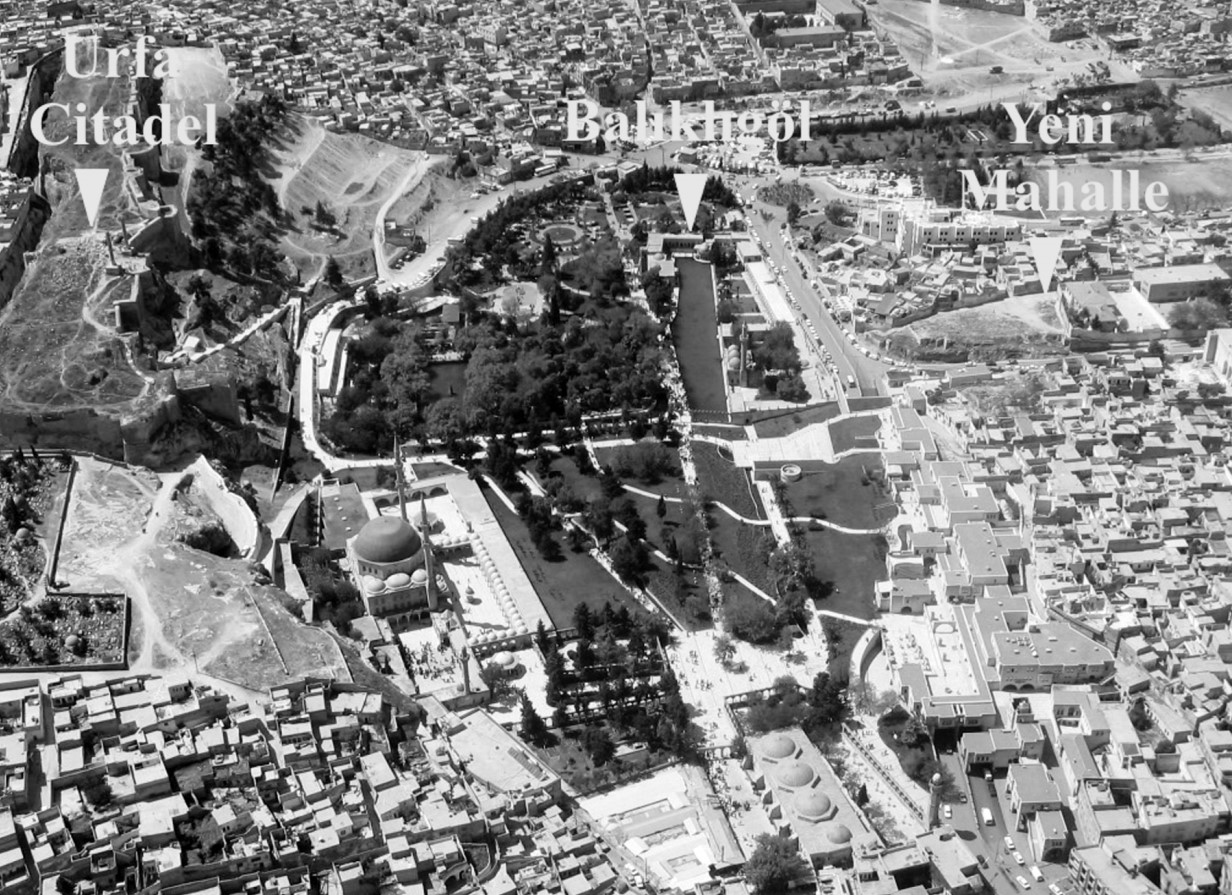
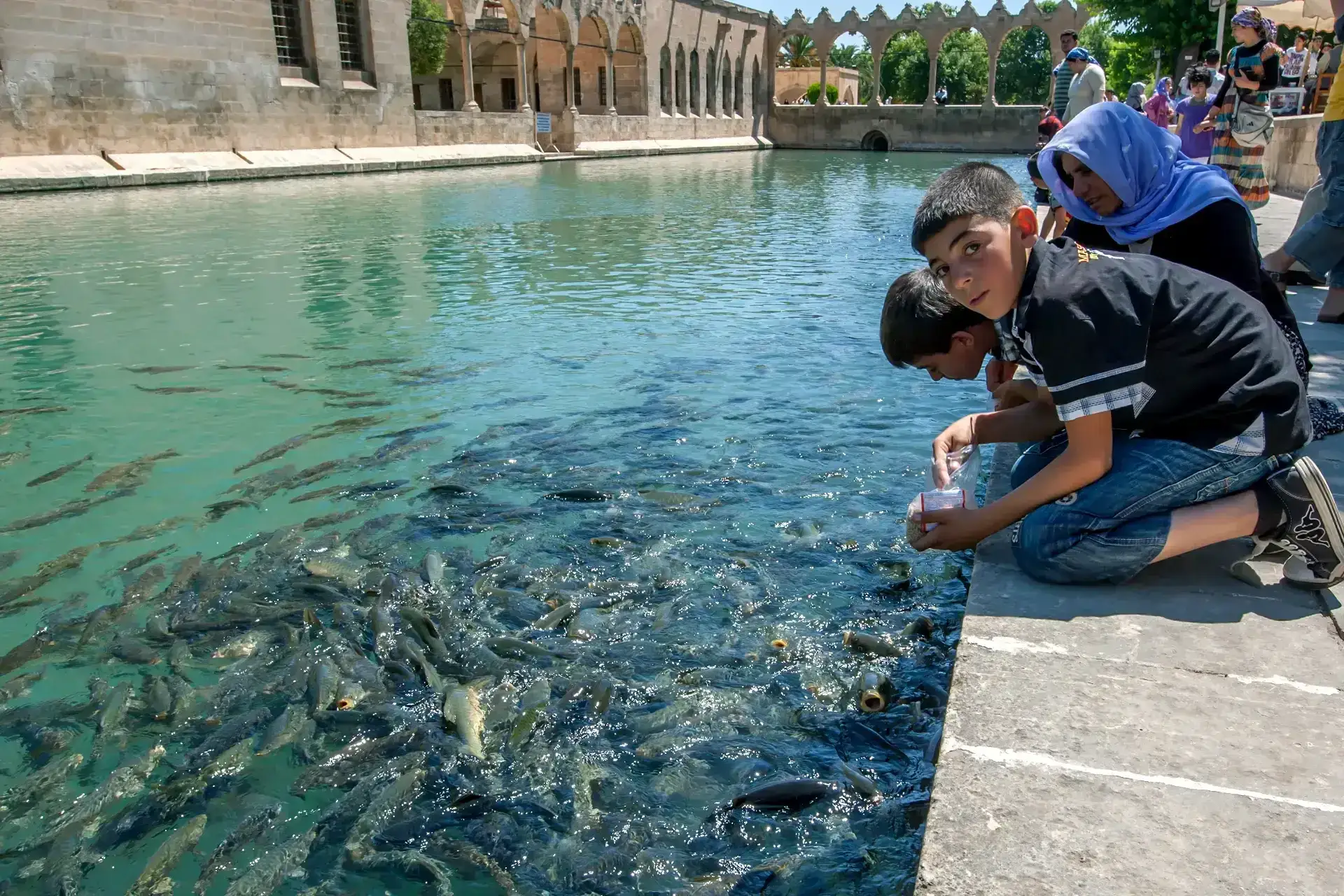
Many do not know that when they enjoy the beatiful park around Balikligöl, the
Pool of the Sacred fish, that just below them is a hidden temple complex and ancient town.
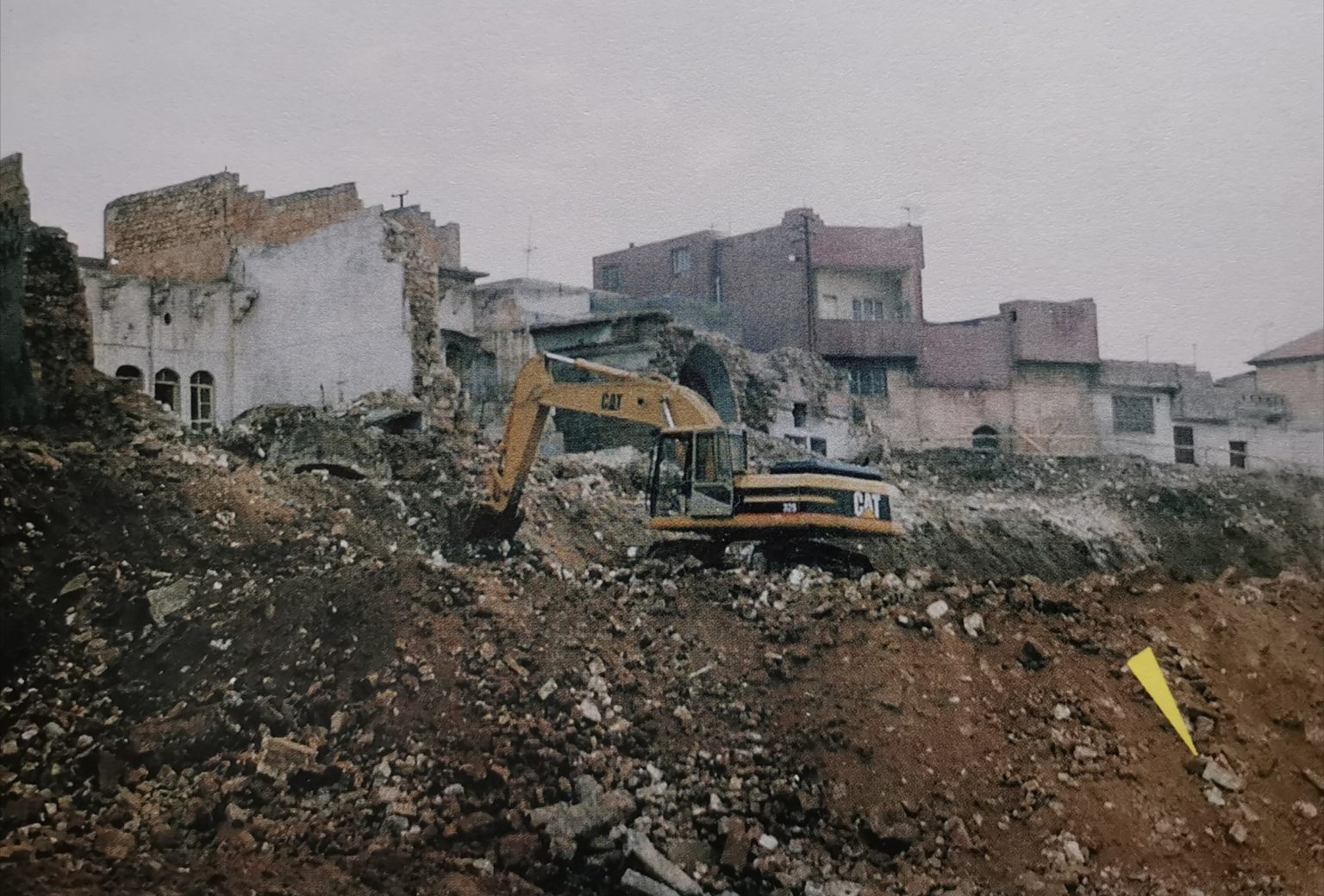
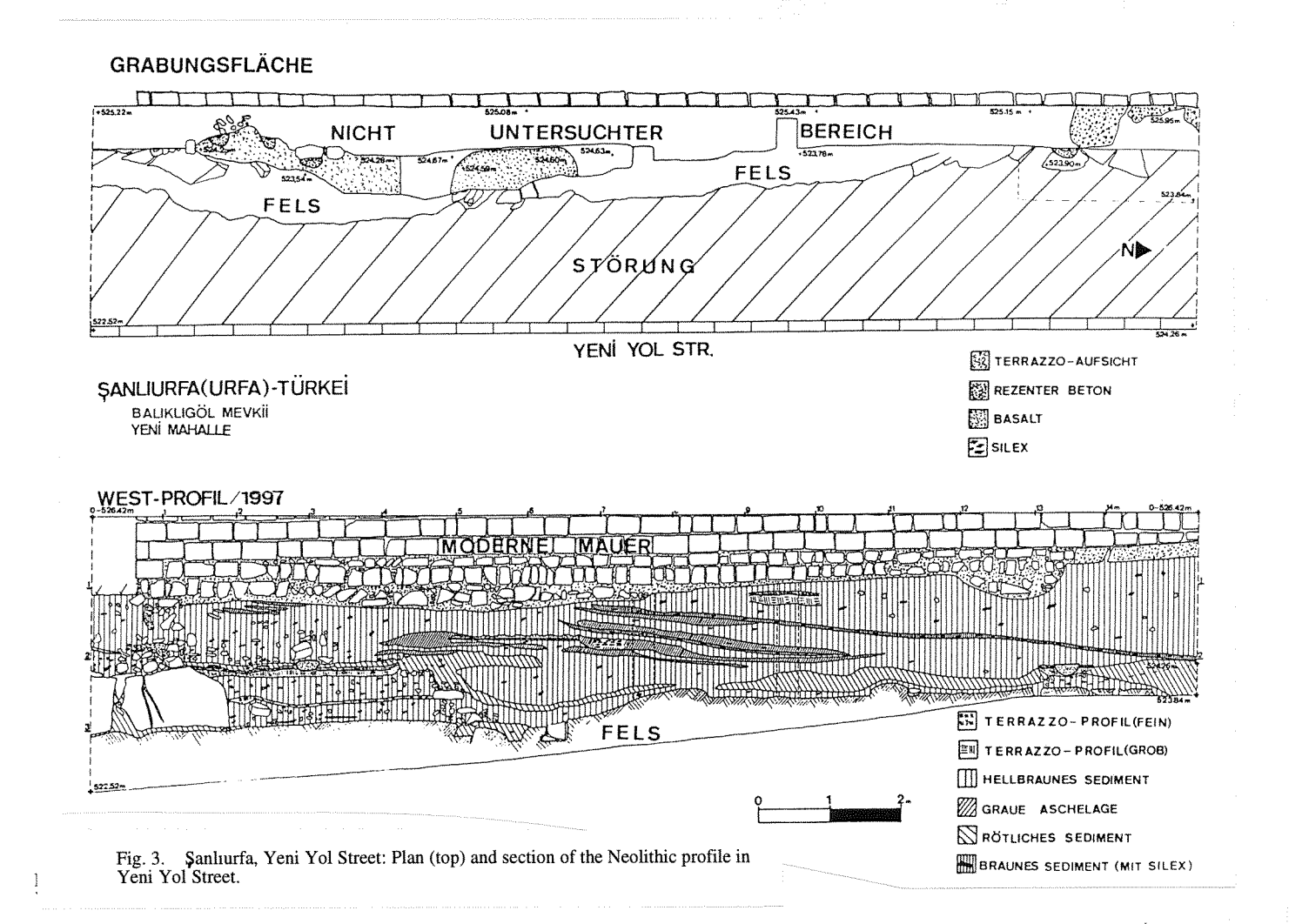
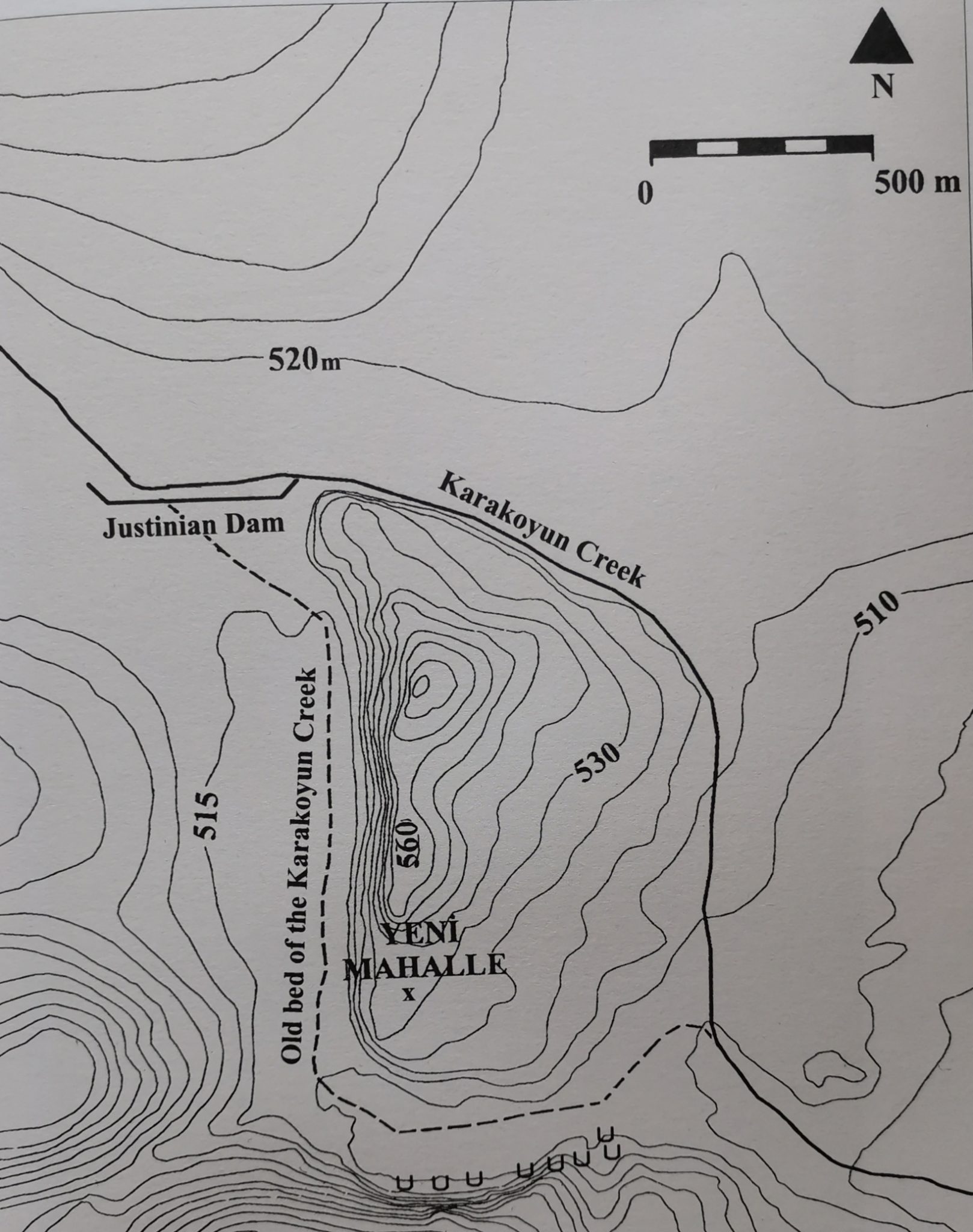
Şanlıurfa – Yeni Mahalle Höyüğü is located within the ancient town center of Şanlıurfa, north of Balıklıgöl sacred area. Today, the entire mound is located within the ancient town center and is underneath singlestorey dwellings. During the recent road construction works performed at this area, a section of approximately 15 m length, 60 cm thickness and 2 m height is revealed.
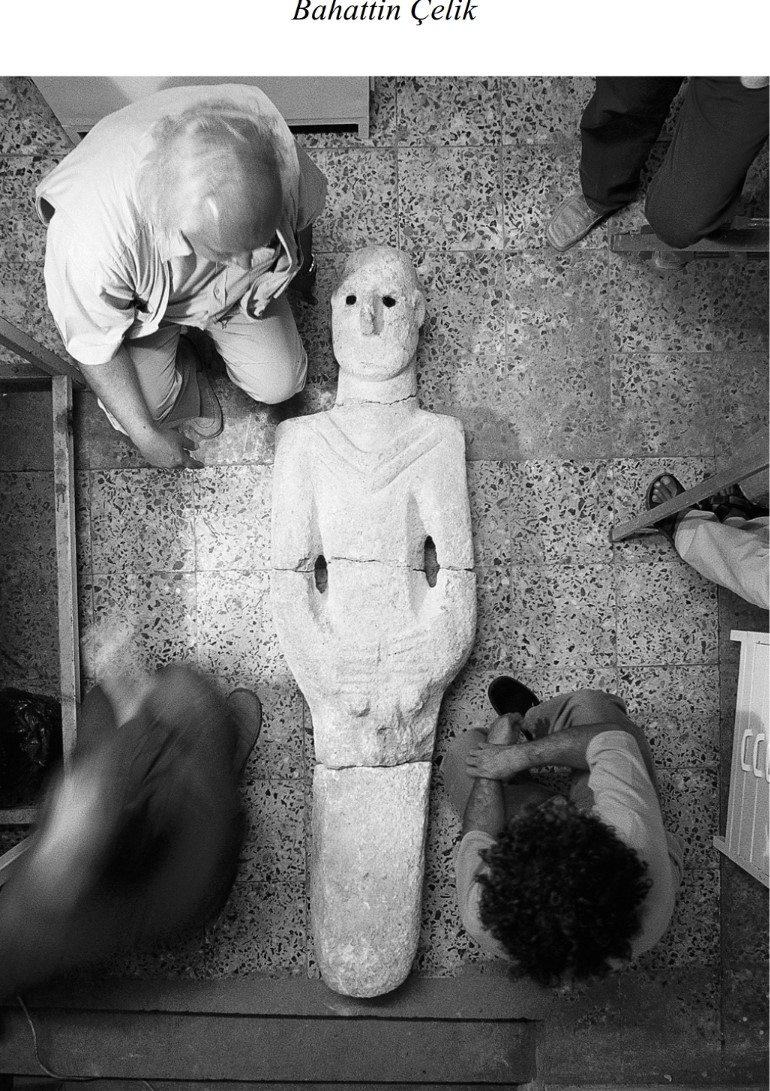
A salvage excavation is then initiated at this section in year 1997 as directed by Şanlıurfa Museum Directorate with Harran University Archeology Department acting as counselors. As a result of the studies conducted therein, 13 cultural levels are discovered, all of which are understood to be from PrePottery Neolithic period. Prior to the studies performed at the revealed section of Şanlıurfa – Yeni Mahalle Höyüğü in year 1997, the 1 lifesize sculpture of a man with approximately 1.90 cm length and an unshaped feet section was retrieved during the “Balıklıgöl Landscaping Work Project” procured by Şanlıurfa Governorate in 1993. This sculpture is modeled as holding his genitals with both hands, with a chevron pattern located around its 2 neck. The chevron pattern is also present on the “T” shaped pillars, which are well-known from the 3 Neolithic settlements in the region.
The ocular section of the sculpture, the mouth section of which is not shaped, is recessed with blade pieces made from obsidian are inserted inside. The sculpture presents identical properties with the sculptures retrieved from Nevali Çori, Göbekli Tepe and Karahan Tepe settlements, which are dated to Pre-Pottery Neolithic Period and the sculpture currently on display at Gaziantep Museum. Furthermore, this sculpture appears as continuation and successor of the tradition of “T” shaped pillars discovered at Nevali Çori, Göbekli Tepe, Karahan Tepe, Hamzan Tepe, Sefer Tepe and Taşlı Tepe settlements and the pillar currently on display at Adıyaman Museum. When the small artifacts retrieved from the salvage excavation conducted at the discovered section are examined from the technologic and typological aspects, domination of the Big Arrowheads Industry (BAI) can be clearly observed. The arrowheads exhibit similarities with the arrowheads retrieved from Byblos, Aswad, Cheikh Hassan and Mureybet settlements. Almost all arrowheads are made on blade extracted from bipolar core.
In particular, Yeni Mahalle Paleolithic tool industry appears to be contemporaneous with Mureybet IVa and IVb epochs. Based on the these similarities, it is concluded that the arrow-heads at the settlement are identical with the arrowheads observed at Early Pre-Pottery Neolithic Period B epoch. The remnants of two round architectural buildings were revealed at the section where the salvage excavation was performed. Furthermore, terrazzo floor coverings, which are understood as an architectural element and part of such buildings were also discovered. Moreover, terrazzo floor covering exam-ples that do not belong to any building were also encoun-tered. Both the terrazzo floors and the round buildings are building traditions prevalently encountered at the region during Epi-Paleolithic and Neolithic period. The round building architecture present at Yeni Mahalle section is a civilian structure, which is an architectural aspect presently not encountered at Urfa region except for Göbekli Tepe and Hamzan Tepe. The round architecture discovered at Hamzan Tepe pertains to a civilian building.
The round buildings discovered at Göbekli Tepe, on the other hand, are characterized as cult structures by the excavators. In general, Round Buildings are an architectural tradition that appears at Levant, Mesopotamia and Southeastern Anatolia Region during Epoch A of the Pre-Pottery Neolithic Period for the first time. The most striking aspect of the round buildings at Şanlıurfa-Yeni Mahalle section is that the buildings have terrazzo coverings at their floors. Two distinct dates came up as a result of the C14 analyzes conducted in year 2004 with the charcoal samples collected from Yeni Mahalle section. One of the dates falls around 11210±90 BC, which is considered as the Terrazzo I epoch, and the other date dates to 8690±100 BC, which is considered as the Terrazzo II epoch. In particular, the date 11210 BC appears to be a date that is adequate for the architectural findings. The date 8690±100 BC, on the other hand, is a date that is adequate for the small artifacts. The section inside the Şanlıurfa – Yeni Mahalle Höyüğü pertaining to the Pre-Pottery Neolithic period must date to 8830-8650 BC. The date 11210 BC is a period that rather represents the Epi-Paleolithic period in the region and no small artifacts are discovered from such period in the section.
Furthermore, the last three C14 analyzes performed recently also did not produce any earlier dates. However, the round architectural building remnants revealed at the section may point out the possibility that levels pertaining to the Epoch A of the Pre-Pottery Neolithic period. This type of buildings both with round plan and with terrazzo floorings only appeared with the round cult buildings only discovered at Level III of Göbekli Tepe and date to Epoch A of the Pre-Pottery Neolithic period. During the excavations recently performed at Göbekli Tepe, a large round structure with terrazzo flooring from Level II was unearthed. This structure dates back to approximately 8600 BC. Therefore, by virtue of the presence of this round structure with terrazzo flooring discovered at Level II at Göbekli Tepe, it wouldn’t be wrong to indicate that the round buildings discovered at Şanlıurfa-Yeni Mahalle section are from around 8800 BC. In conclusion, in the light of the recent C14 analyses carried out with the charcoal samples collected from the section, it is clearly understood that Şanlıurfa-Yeni Mahalle settlement is first founded during Epoch B of the Early Pre-Pottery Neolithic Period on the bedrock for the flint stone tool find obtained from Yeni Mahalle Höyüğü
correlate with the C14 analyses results. For this reason it’s appropriate to date the settlement to PPNB period.
Bahattin Çelik
The Urfa Man, also known as the Balıklıgöl Statue or Şanlıurfa Man, is a remarkable monumental limestone sculpture representing a human figure. Dating to the Pre-Pottery Neolithic B period, approximately 9,000 BC, it was discovered in 1993 during landscaping work in Şanlıurfa, Turkey. This statue is recognized as the oldest known life-sized and naturalistic human sculpture in the world, showcasing advanced sculptural techniques from early Neolithic communities in Upper Mesopotamia.
Physical Description
Standing approximately 1.8 meters tall, slightly larger than life-size, the Urfa Man depicts a male figure with a distinctive appearance:
Detailed, featuring prominent ears, a long nose, and hollowed eye sockets once inlaid with black obsidian pieces, though notably lacking a mouth.
It wears a V-shaped necklace or garment, has arms folded across the abdomen with hands grasping the genitals, and tapers into a conical base without legs. This suggests it was originally embedded in the ground.
Carved monolithically from a single block of limestone sourced from local quarries, highlighting the use of readily available regional stone for monumental sculpture. The fine-grained texture of the material allowed for detailed carving, including anatomical features like the torso and limbs, achieved through subtractive techniques.
The statue is currently housed in the Şanlıurfa Archaeology and Mosaic Museum.
Discovery and Excavation
The Urfa Man statue was unearthed in 1993 during construction activities in the Balıklıgöl quarter of Şanlıurfa, specifically at the Pre-Pottery Neolithic site of Urfa-Yeni Mahalle. Local construction workers discovered the artifact while digging foundations for urban development. It was found broken into four nearly equal pieces, partially buried within the settlement layers. Unfortunately, the construction caused significant damage to the surrounding archaeological context, destroying associated Neolithic structures.
Upon its discovery, workers reported the statue to local authorities, leading to swift intervention by the Şanlıurfa Governorate. The pieces were acquired, and temporary on-site protection measures were implemented. The artifact was then relocated for detailed examination and conservation, marking the beginning of formal archaeological involvement. This serendipitous discovery underscored the vulnerability of prehistoric sites to modern urban expansion in the region.
Preservation Efforts
Following its accidental unearthing, the Urfa Man was promptly relocated to the Şanlıurfa Museum for safekeeping. Conservation efforts have focused on addressing the statue’s limestone composition, which is prone to fragility and erosion. These measures have been coordinated by the Turkish Ministry of Culture and Tourism’s General Directorate of Cultural Assets and Museums, in collaboration with international archaeological experts.
As of 2025, the statue is displayed in a climate-controlled environment at the Şanlıurfa Archaeology and Mosaic Museum to mitigate risks from humidity, temperature variations, and airborne pollutants.
Iconographic Features and Artistic Style
The Urfa Man statue depicts a standing male figure in a naturalistic yet stylized form, with arms bent at the elbows and hands grasping the genitals. Its head is tilted slightly to one side, contributing to a subtle dynamic quality. Key features include prominent almond-shaped eyes, originally inlaid with black obsidian, and a defined nose and ears without a carved mouth. The hands show separated fingers, and a V-shaped motif encircles the neck, possibly representing a necklace or garment.
The body proportions reflect realistic human anatomy in the torso and limbs, with visible ribs and muscular definition. However, the head appears disproportionately large and stylized to emphasize facial elements, particularly the eyes. The lower body tapers into a plain, conical base, suggesting it was intended to be socketed into the ground rather than being a portable object.
The Urfa Man’s scale is significantly larger than typical Neolithic figurines from contemporaneous sites, making it the earliest known life-sized human sculpture from the Pre-Pottery Neolithic period. Its naturalistic style contrasts with the more abstract, faceless T-shaped pillars at nearby Göbekli Tepe, which primarily feature zoomorphic reliefs. Unlike later Sumerian statues adorned with regalia, the Urfa Man is rendered in a simple, unadorned form, emphasizing raw human anatomy. While its material (local limestone) parallels that used for Göbekli Tepe’s T-pillars, it diverges by focusing exclusively on anthropomorphic form rather than the predominantly animal-centric or hybrid carvings common at those sites.
Archaeological Context
The Urfa Man statue was discovered in the old city center of Şanlıurfa, near the southwestern city wall and in proximity to the sacred pools of Balıklıgöl. This location places the find within a densely built urban area that overlays prehistoric layers, complicating further excavation. Regionally, the site lies in the Upper Mesopotamia plateau of southeastern Turkey, characterized by limestone plateaus and highlands overlooking the expansive Harran Plain. The area’s fertile valleys, approximately 80 kilometers east of the Euphrates River valley, provided advantageous conditions for early human settlement.
The site contributes to the broader Neolithic cultural landscape in the Şanlıurfa region, near the Taş Tepeler sites inscribed on the UNESCO World Heritage List in 2018. The statue’s preservation benefited from its burial in soft alluvial deposits originating from ancient watercourses, which formed a protective stratigraphic layer approximately 2 meters deep.
Chronological Placement
The Urfa Man statue was dated through radiocarbon analysis of organic sediments from the surrounding Yeni Mahalle settlement, yielding calibrated dates of approximately 8830-8650 BC. Stylistic comparisons with T-shaped pillars and anthropomorphic sculptures from contemporaneous sites further support this placement. This chronology situates the statue within the Pre-Pottery Neolithic B (PPNB) period, which succeeded the Pre-Pottery Neolithic A (PPNA) around 8500 BC. The PPNB phase at Yeni Mahalle reflects a transition to more permanent communities, evidenced by terrazzo floors and flint assemblages.
The statue’s temporal context overlaps with the construction and use of Göbekli Tepe, highlighting shared cultural practices in the Şanlıurfa region during a formative era of Neolithic development. The Urfa Man predates the invention of pottery by several millennia, underscoring the pre-ceramic technological and artistic sophistication of PPNB societies.
Associated Artifacts
During the limited salvage excavation, several artifacts were co-discovered in the same trench as the statue. These included smaller stone tools such as flint blades, bone fragments, and fragmentary figurines. A small T-shaped stele was also recovered, linking the find to broader regional monumental art traditions. These items, typical of PPNB assemblages, suggest localized crafting and daily activities at the site. In the broader Balıklıgöl area nearby, eye idols (small stone amulets) have been recovered from contemporaneous PPNB contexts.
Cultural and Symbolic Significance
The Urfa Man statue represents a significant technological advancement in the Pre-Pottery Neolithic period, showcasing mastery of large-scale stone carving using only pre-metal tools. Its creation involved labor-intensive techniques like chipping, abrading, and grinding, implying organized labor or specialized artisans. Artistically, the statue marks an evolutionary shift from the abstract, symbolic representations prevalent in the earlier Pre-Pottery Neolithic A phase to more naturalistic depictions of the human form in the Pre-Pottery Neolithic B. This transition reflects a growing emphasis on self-representation, moving beyond geometric or animal motifs toward detailed human anatomy.
The statue’s lifelike proportions and obsidian-inset eyes highlight progression toward realism in sculptural expression. The precise anatomical proportions and intricate incisions demonstrate a high level of technical proficiency and craftsmanship. This early achievement influences interpretations of how settled agriculture enabled artistic experimentation and communal identity formation.
Gender/Identity:** The visible phallus juxtaposed with fluid proportions has led to views of it as androgynous or a universal human archetype. From a queer feminist perspective, the phallic element could represent an agent of ecstatic ritual facilitating spiritual transcendence and communal bonding.
### Connections to Broader Neolithic Culture
The Urfa Man statue shares a contemporary cultural horizon with the monumental structures at Göbekli Tepe, located approximately 12 kilometers to the north. While Göbekli Tepe is renowned for its T-shaped limestone pillars adorned with animal reliefs, the Urfa Man’s naturalistic human form provides a striking contrast, highlighting diverse yet complementary ritual practices within the same hunter-gatherer societies of Upper Mesopotamia.
In September 2025, a life-size human statue was discovered at Karahan Tepe, further evidencing similar human-like sculptures and strengthening suggestions of interconnected artistic traditions across nearby PPNB settlements. As part of the broader Taş Tepeler archaeological project, the Urfa Man exemplifies the interconnected network of over a dozen Neolithic sites spanning approximately 200 kilometers around Şanlıurfa, including Göbekli Tepe, Karahan Tepe, and Nevalı Çori. This initiative reveals a regional society capable of organized labor and symbolic expression, with the Urfa Man’s life-sized form underscoring advancements in stone carving shared among these “temple-building” communities.
The Urfa Man also reflects patterns of cultural diffusion across the Neolithic Near East, with parallels in early anthropomorphic art at Syrian sites such as Tell Qaramel. This statue marks the emergence and spread of large-scale human representations prior to the region’s urbanization. In modern contexts, the Urfa Man’s significance has been amplified by Göbekli Tepe’s designation as a UNESCO World Heritage Site in 2018, which recognizes the site’s role in illuminating early monumental architecture and social networks in Upper Mesopotamia. This recognition underscores the statue’s contribution to understanding the foundational shifts in human society during the Neolithic Revolution


