Karahan Tepe
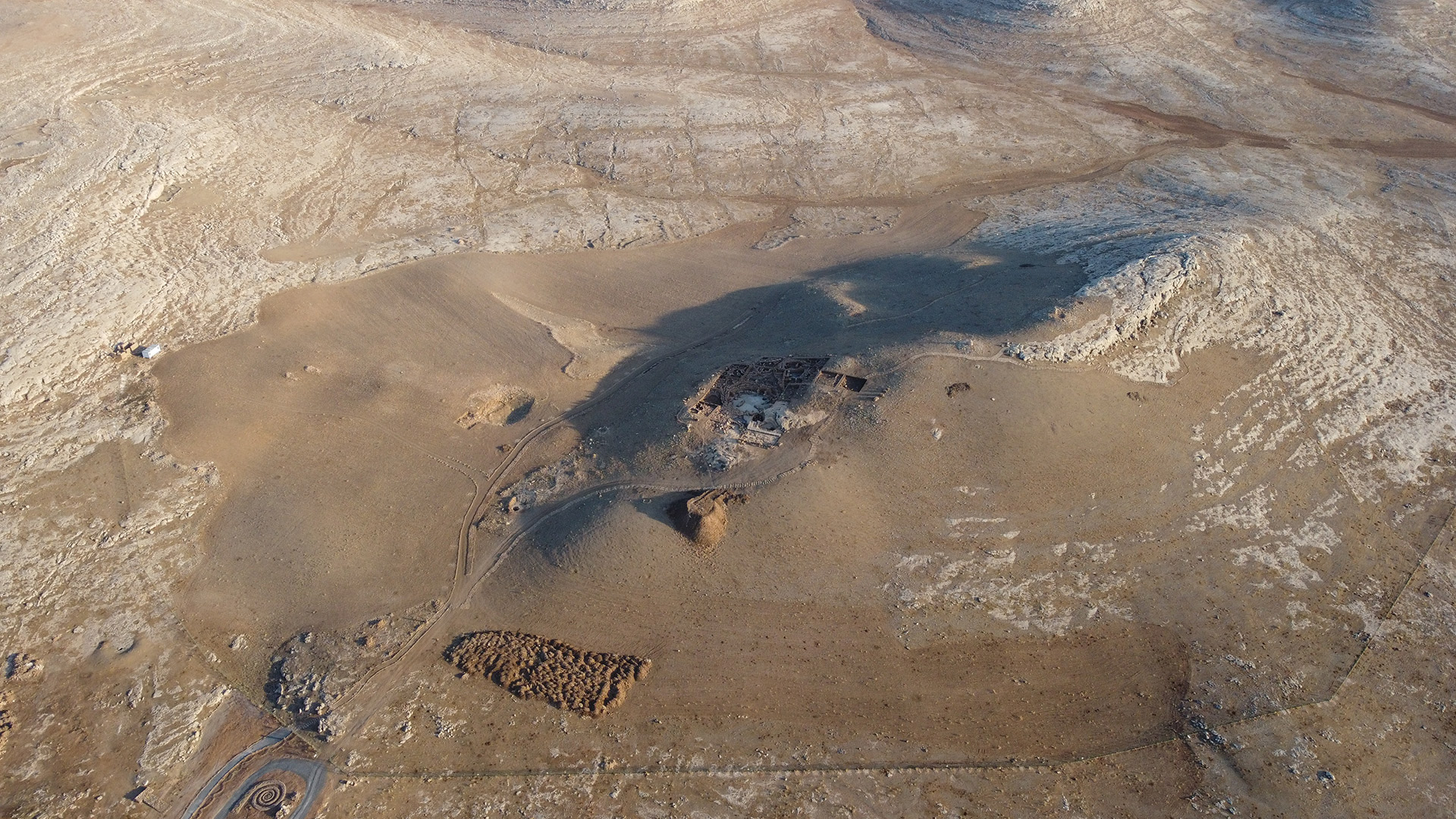
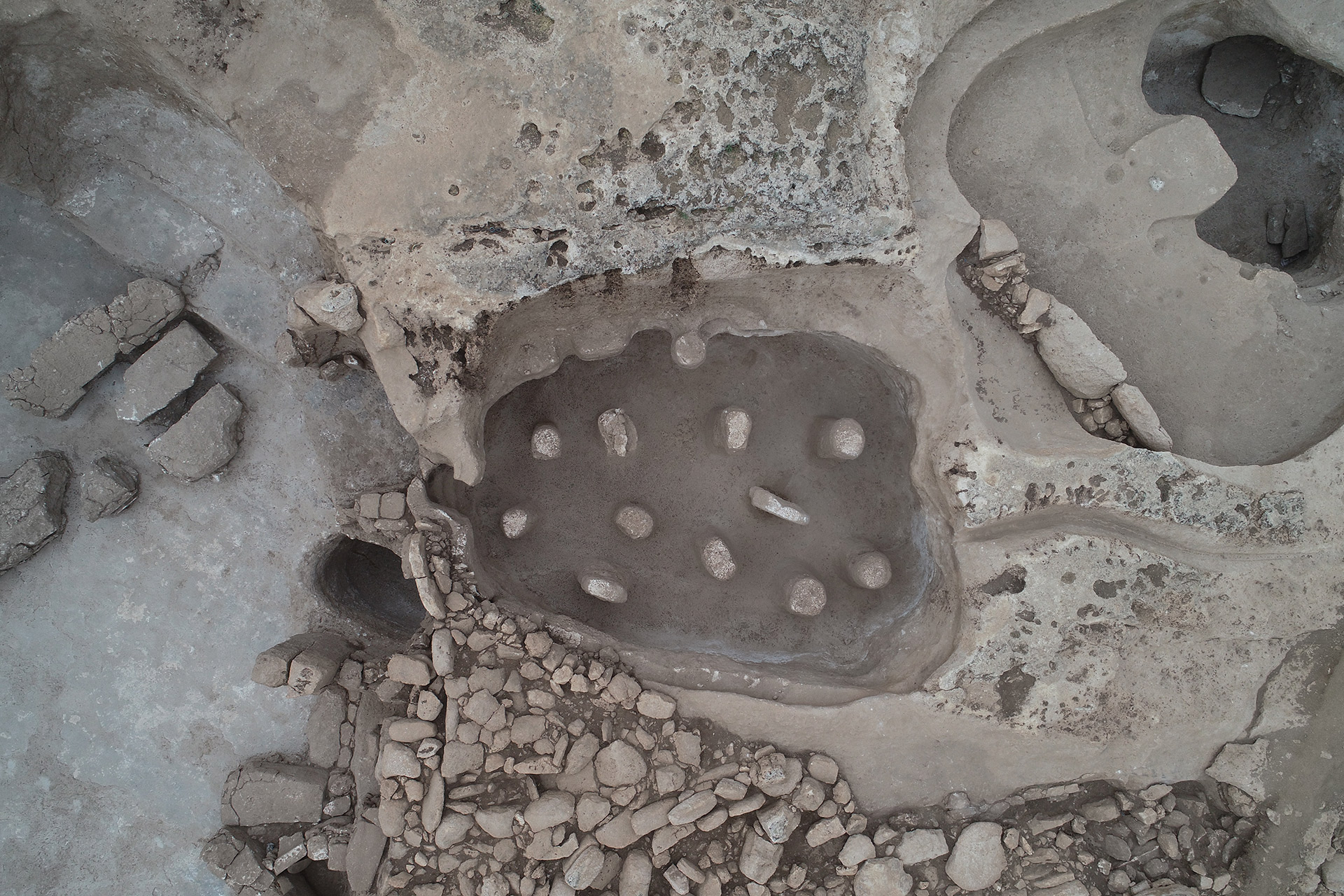
The extraordinary hall of phalluses, carved into the bedrock, is spellbinding and mysterious.
he stares out over the hall of phalluses.
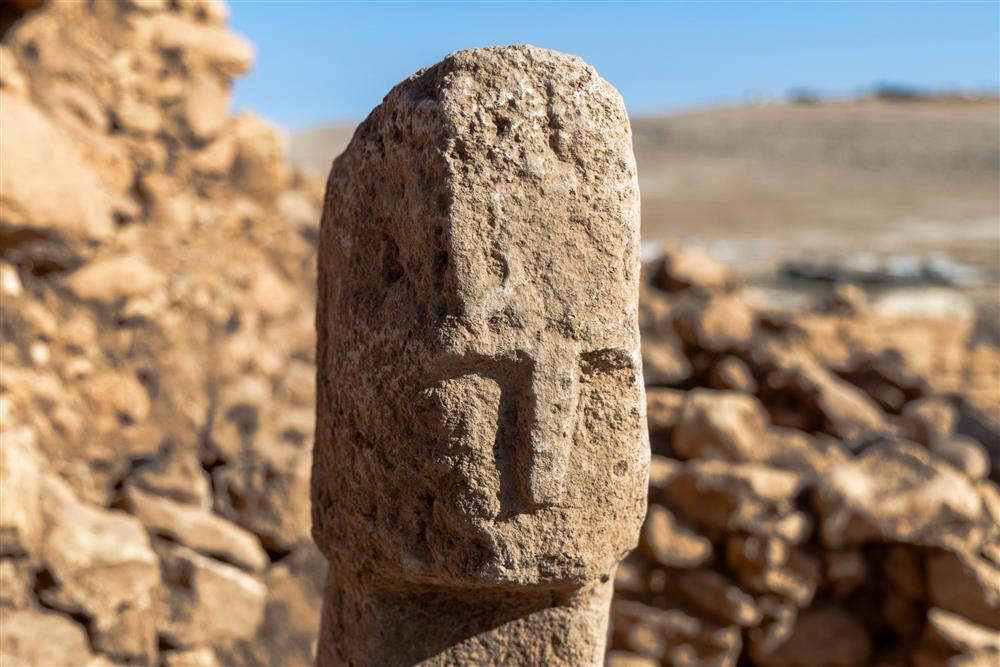
the earth arose this fella.
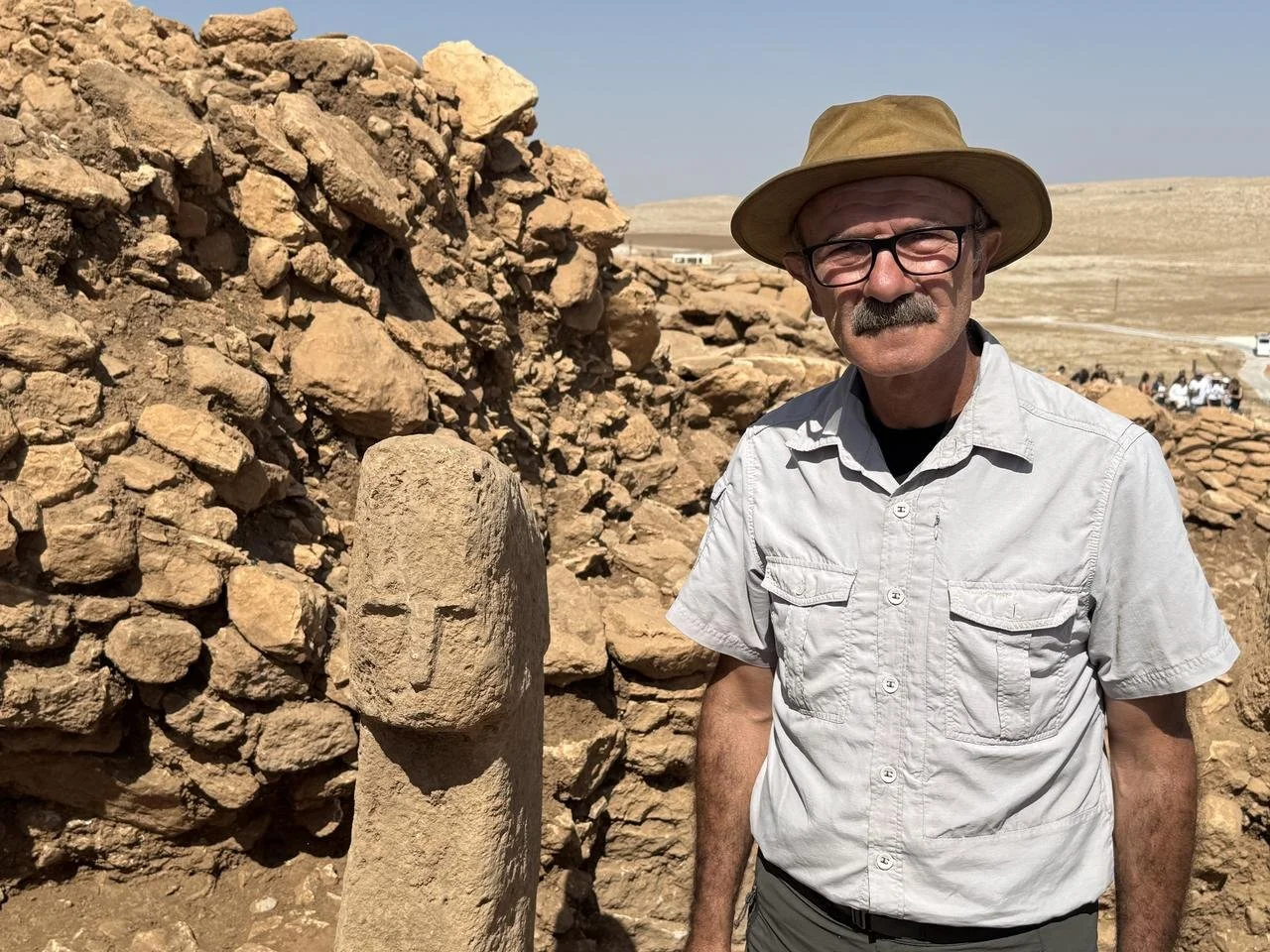
Karahan Tepe dig,
Professor
Necmi Karul with a
recent discovery.
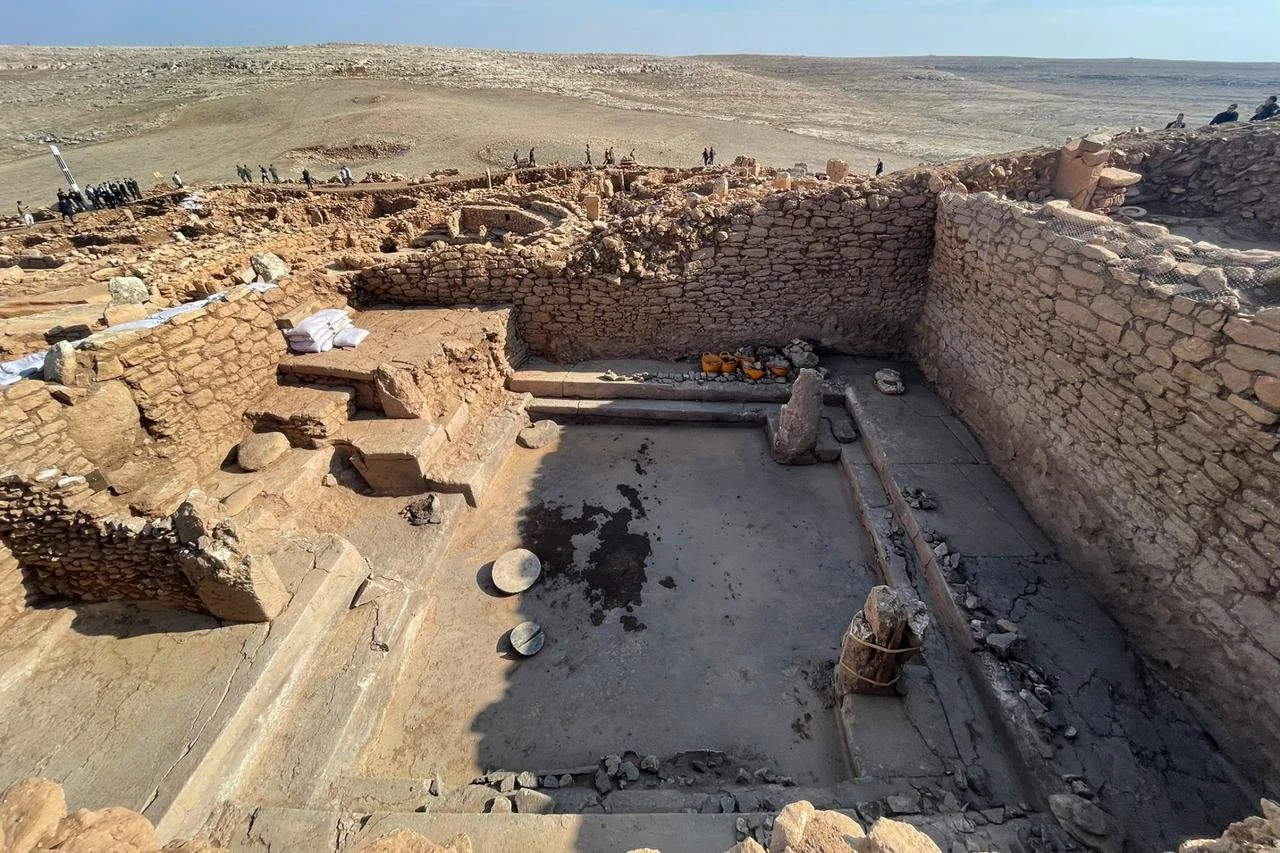
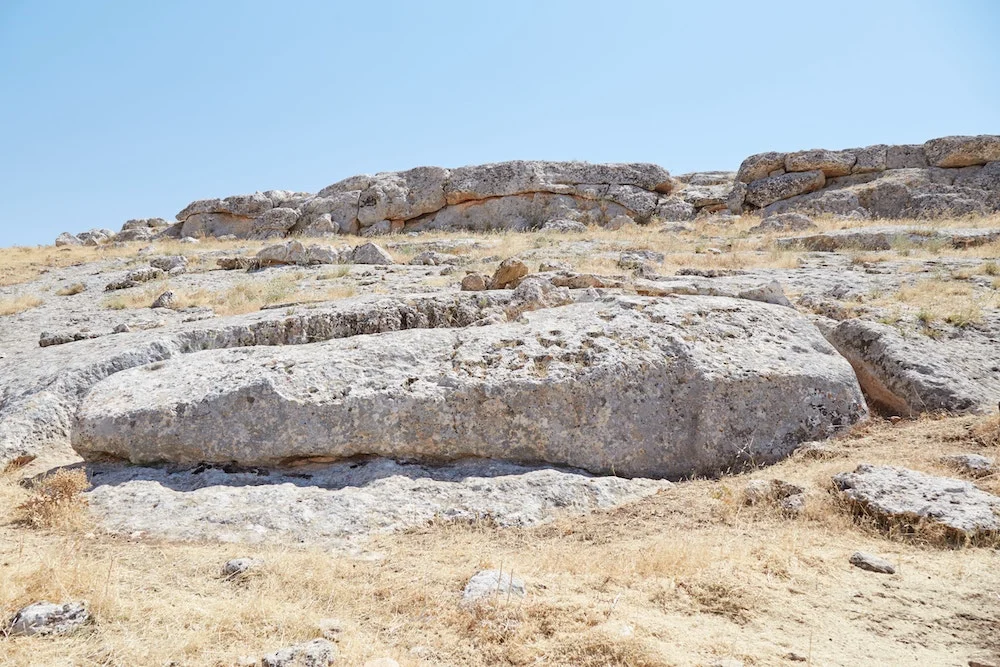
Tepe reveals some secret of how the sites were built.
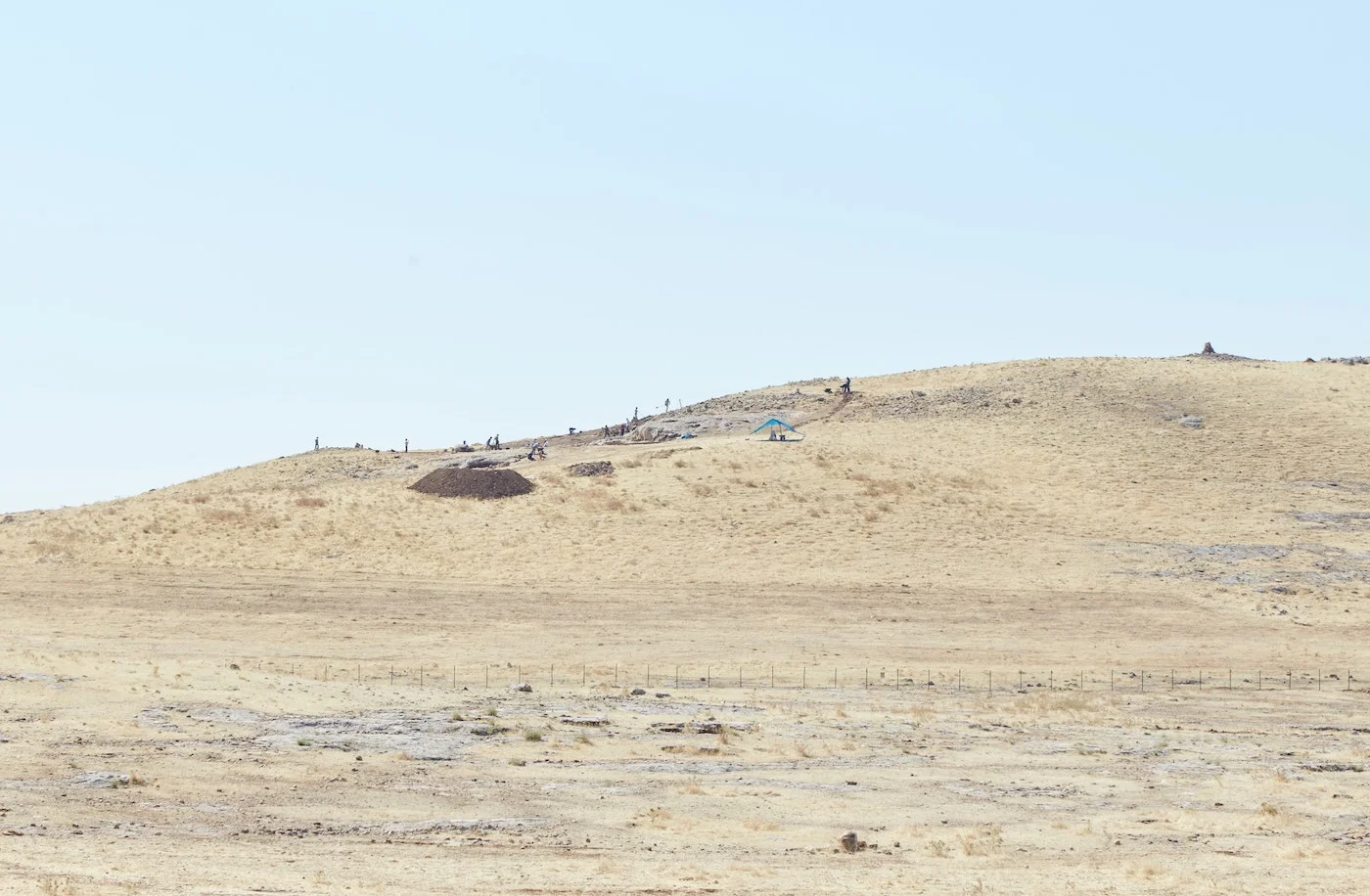
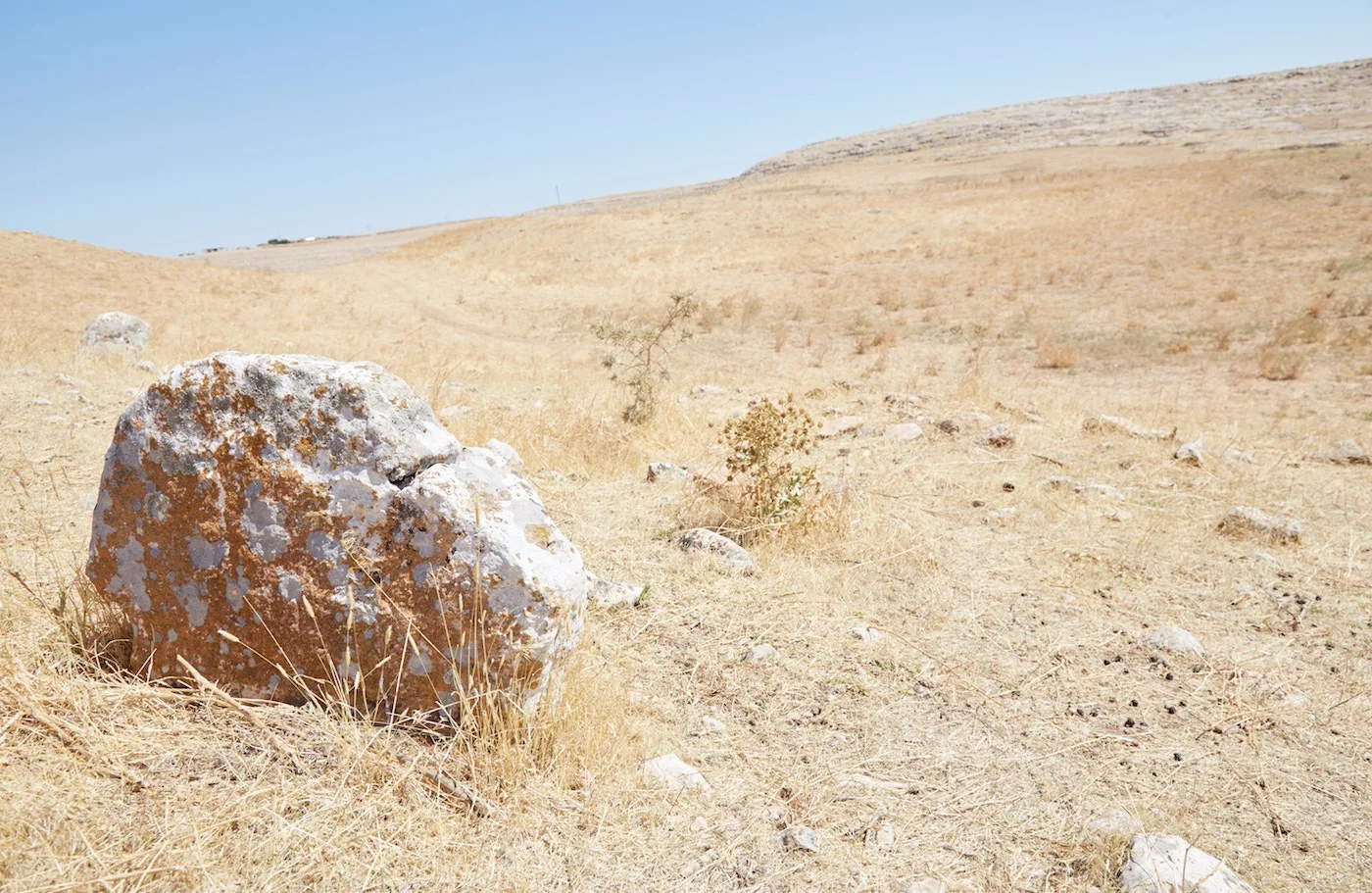
T-forms poking up from the earth, all belonging to circular formations.
Karahan Tepe
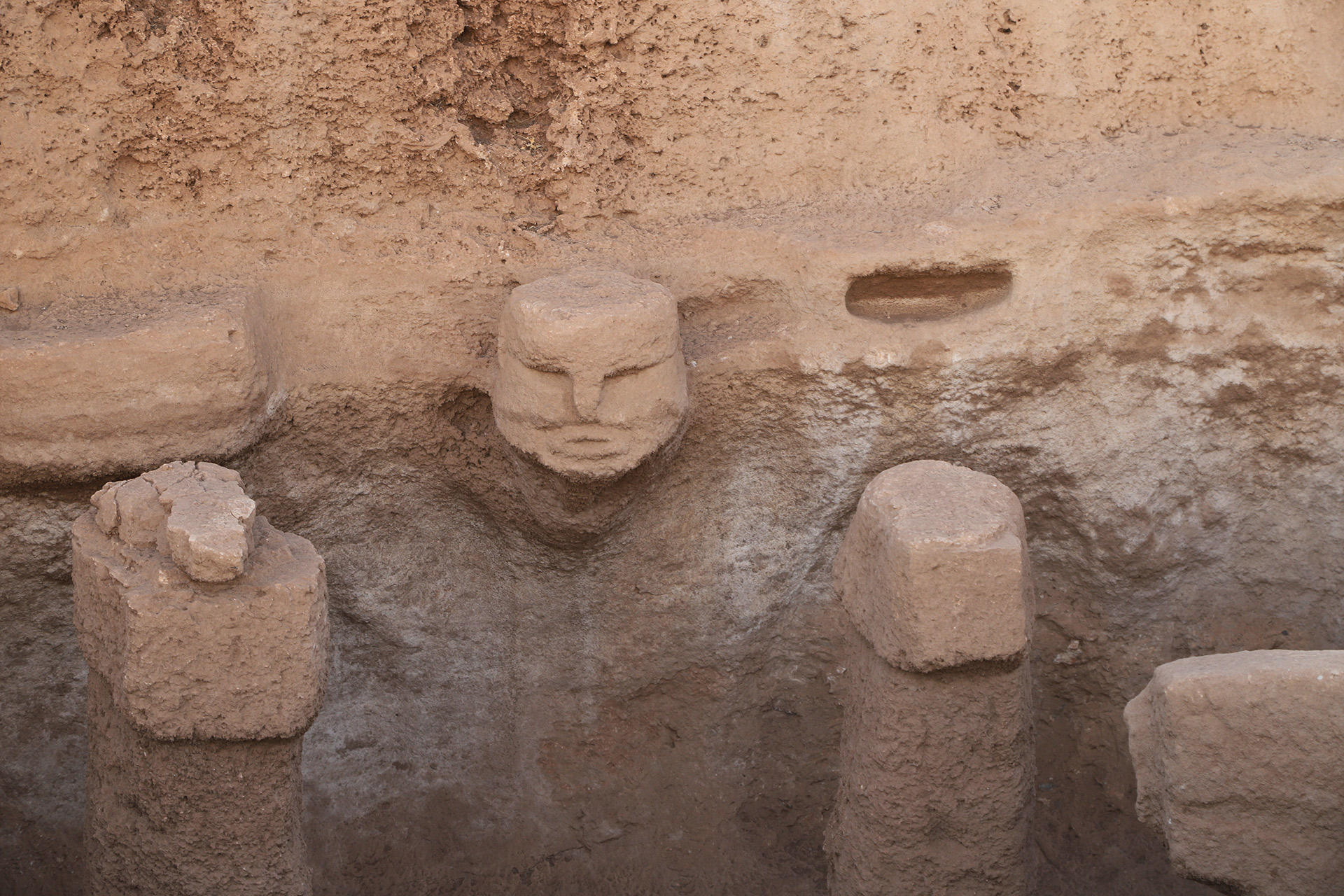
Karahan Tepe is a Neolithic archaeological site located in the Şanlıurfa Province of southeastern Turkey, dating to the Pre-Pottery Neolithic period around 9500-8000 BCE, approximately 10,000–11,500 years ago, and featuring T-shaped limestone pillars, circular enclosures, and intricate relief carvings of animals, humans, and abstract symbols. Discovered in 1997 during surveys of the region’s prehistoric settlements, systematic excavations began in 2019 as part of the broader Taş Tepeler (Stone Hills) project, which encompasses multiple early Neolithic sites in the area. The site spans about 325,000 square meters and includes at least 266 standing pillars, some up to 5 meters tall, arranged in several enclosures, suggesting ritual or communal functions similar to those at the nearby Göbekli Tepe, located roughly 45 kilometers to the west. Often regarded as a “sister site” to Göbekli Tepe, Karahan Tepe provides crucial evidence for the transition from hunter-gatherer societies to early settled communities in the Fertile Crescent, with findings indicating possible year-round habitation for up to 1,500 years and the coexistence of sacred and domestic spaces. Artifacts include detailed reliefs of snakes, foxes, and humanoid figures on the pillars, as well as symbolic motifs that may represent astronomical or calendrical knowledge. Notable discoveries encompass a 2.3-meter-tall statue of a seated human figure holding a phallus, dated to circa 9400 BCE and recognized as one of the earliest realistic human sculptures, along with a finely carved vulture statue demonstrating advanced Neolithic artistry. In October 2025, excavations uncovered a T-shaped stele bearing a detailed human face with sharp contours, deep eye sockets, and a prominent nose, reinforcing interpretations of these pillars as anthropomorphic representations and highlighting the site’s role in early symbolic expression. These findings, documented through ongoing work by the Şanlıurfa Museum and international teams, underscore Karahan Tepe’s importance in reshaping understandings of prehistoric social complexity, architecture, and cultural development in the region.
Discovery and Excavation
Karahan Tepe was first identified in 1997 by archaeologist Bahattin Çelik of Harran University during regional surveys in the Şanlıurfa Province of southeastern Turkey. These initial surveys documented surface scatters of lithic tools, obsidian fragments, and animal bones, alongside over 266 T-shaped stelae visible above ground, spaced approximately 1.5 to 2 meters apart and protruding 50 to 60 centimeters from the soil. The T-shaped stelae represent a hallmark of Pre-Pottery Neolithic monumental architecture in the region. By 2000, preliminary assessments estimated the site’s core extent at approximately 10 hectares across its northern and eastern slopes, with an additional 5 hectares encompassing nearby quarries used for extracting limestone pillars. These findings positioned Karahan Tepe within the Şanlıurfa Neolithic Research Project, known as Taş Tepeler (“Stone Hills”), a collaborative effort to survey and contextualize early Neolithic settlements alongside sites like Göbekli Tepe.
Ongoing Excavations
Excavations at Karahan Tepe resumed systematically in 2019 under the leadership of archaeologist Necmi Karul from Istanbul University, as part of the broader Şanlıurfa Neolithic Research Project, commonly referred to as the Taş Tepeler initiative, which encompasses multiple Neolithic sites in the region. This effort builds on earlier surveys to explore the site’s monumental architecture and settlement patterns through targeted digs primarily on the western slope, where the topography features exposed bedrock and sloping terrain. Key methodological approaches include geophysical surveys utilizing geomagnetic measurements and surface scans to identify subsurface features without extensive disturbance, complemented by stratigraphic analysis that has delineated three distinct occupational phases at the site. These techniques have facilitated the mapping of enclosures and the careful exposure of buried elements, revealing a complex of circular communal buildings intentionally filled with sterile soil and stones, along with over 250 T-shaped pillars serving as stelae. As of 2025, excavations continue across the approximately 32.5-hectare (325,000 square meters) site, with recent discoveries including a T-shaped pillar featuring a carved human face in October 2025, and only a small percentage of the area having been fully explored. Ongoing challenges encompass the preservation of fragile sculptures and architecture, many of which show signs of deliberate damage such as defaced facial features, necessitating meticulous conservation during exposure. Efforts are also integrated with regional initiatives, including the UNESCO World Heritage designation of nearby Göbekli Tepe, to address visitor safety, site protection, and sustainable management across the Taş Tepeler landscape, with the site opening to the public in 2025 following enhanced protective measures.
Location and Chronology
Karahan Tepe is situated at coordinates 37°05′33″N 39°18′13″E, in the Şanlıurfa Province of southeastern Turkey, near the village of Yağmurlu. This positioning places it within the broader Taş Tepeler region, a cluster of Neolithic sites spanning the foothills of the Taurus Mountains and overlooking the Harran and Viranşehir plains in Upper Mesopotamia. The site lies approximately 46 kilometers southeast of the renowned Göbekli Tepe, forming part of an interconnected network of early Neolithic settlements that includes Boncuklu Tarla and Gürcütepe, among others. These nearby locations highlight the density of prehistoric activity in the area, with Karahan Tepe contributing to the Taş Tepeler project’s documentation of over 12,000-year-old cultural landscapes. Topographically, Karahan Tepe occupies a limestone ridge within the Tektek Mountains National Park, at an elevation of around 700 meters above sea level. The terrain features terraced heights with exposed bedrock slabs, sharp drops to the north, and integrated quarries on the western slopes, where local limestone was extracted for constructing T-shaped pillars and other monumental elements. During the Pre-Pottery Neolithic period, the regional paleoenvironment around Şanlıurfa, including sites like Karahan Tepe, consisted of a semi-arid steppe interspersed with woodland patches, milder and wetter than modern conditions, with pollen evidence indicating deciduous forests (such as oak and willow), herbaceous plants, and wild cereals like wheat and barley. This mosaic landscape, supported by seasonal water sources and diverse flora and fauna, facilitated hunter-gatherer economies through access to abundant resources for foraging and ritual activities.
Dating and Phases
Karahan Tepe’s occupation spans approximately 10,000 to 9,500 BCE, aligning with the Pre-Pottery Neolithic A (PPNA) and extending into the early Pre-Pottery Neolithic B (PPNB). This timeframe positions the site as one of the earliest documented examples of monumental construction by hunter-gatherer communities in Upper Mesopotamia, reflecting a pivotal transition from mobile foraging to more sedentary patterns. Radiocarbon dating of organic remains, such as charred plant materials and animal bones recovered from stratigraphic contexts, has established this broad chronology, with calibrated dates clustering around the late 11th millennium BCE. The site’s developmental sequence indicates phased construction during the early PPNA, marked by the erection of simple enclosures and bedrock-cut features that served as foundational elements. These initial structures, often circular or rectangular in plan, were built using locally quarried limestone T-shaped pillars and walls, suggesting organized labor by small groups. Subsequent phases involved expansions, including the addition of interconnected rooms and symbolic installations, as well as periodic repairs to weathered components, evidenced by multiple fill layers and rebuilding episodes in the stratigraphic record. Such layering reveals intentional deposition of debris and soil, possibly for ritual closure or maintenance, spanning several centuries of intermittent use. This phased evolution is corroborated by radiocarbon assays from the Taş Tepeler network of sites, where Karahan Tepe’s dates overlap with those from nearby settlements like Göbekli Tepe and Sefer Tepe, indicating a shared regional timeline. Organic samples from fill deposits and associated hearths yield consistent results supporting the PPNA onset, while later PPNB traces appear in upper layers with refined lithic tools. Potentially predating Göbekli Tepe’s primary enclosures by up to a few centuries, Karahan Tepe underscores the networked character of early Neolithic innovation across the Şanlıurfa plain.
Architectural Features
Karahan Tepe’s architectural landscape is dominated by a series of circular and rectangular enclosures, constructed using dry-stone walls from local limestone blocks, which form the site’s primary structural complexes. These enclosures, often oval or round in plan, measure up to approximately 20 meters in diameter and are interpreted as serving ritual or communal functions, akin to those at nearby Göbekli Tepe. Excavations since 2019 have revealed at least four to five such enclosures, including connected ceremonial structures and rock-cut chambers integrated into the limestone bedrock. Many enclosures incorporate internal features such as bench-like seating along the walls and niches for symbolic elements, enhancing their ceremonial character. The walls typically consist of unhewn limestone slabs stacked without mortar, sometimes reinforced with T-shaped pillars embedded at intervals to support the structure. Evidence from ongoing digs points to deliberate filling with rubble and soil after periods of use, a practice indicative of ritual decommissioning common in the region’s Pre-Pottery Neolithic sites. Stratigraphic analysis shows multiple superimposed building phases in several enclosures, suggesting prolonged reuse and modification over centuries, with later constructions built atop earlier ones before final burial. This layering underscores the site’s extended occupation from around 9500 to 8000 BCE, reflecting evolving architectural practices within the Taş Tepeler cultural complex.
Pillars and Stelae
At Karahan Tepe, over 266 T-shaped monolithic stelae have been documented, primarily from early surveys of the site. These pillars, carved from local Eocene and Miocene limestone sourced from nearby outcrops, exhibit evidence of on-site quarrying and shaping, including unfinished examples still embedded in the bedrock. One such unfinished pillar measures 4.5 meters in length, indicating the scale of extraction processes employed by the site’s builders. The stelae range in height from about 1 to 3 meters, though some excavated examples reach up to 4.5 meters, with larger ones weighing several tons based on their dimensions and material density. They are typically arranged in pairs or circular formations within the site’s architectural enclosures, where many protrude 50-60 cm above the surface in their in situ positions. The T-shaped design often includes arm-like projections extending from the sides of the pillar head, contributing to their anthropomorphic appearance. Variations among the pillars include differences in size and surface treatment, with some bearing abstract or symbolic engravings that differ from more detailed figural motifs found elsewhere at the site. These features highlight the pillars’ role as key structural elements, often integrated directly into enclosure walls for stability and symbolic emphasis.
Artifacts and Iconography
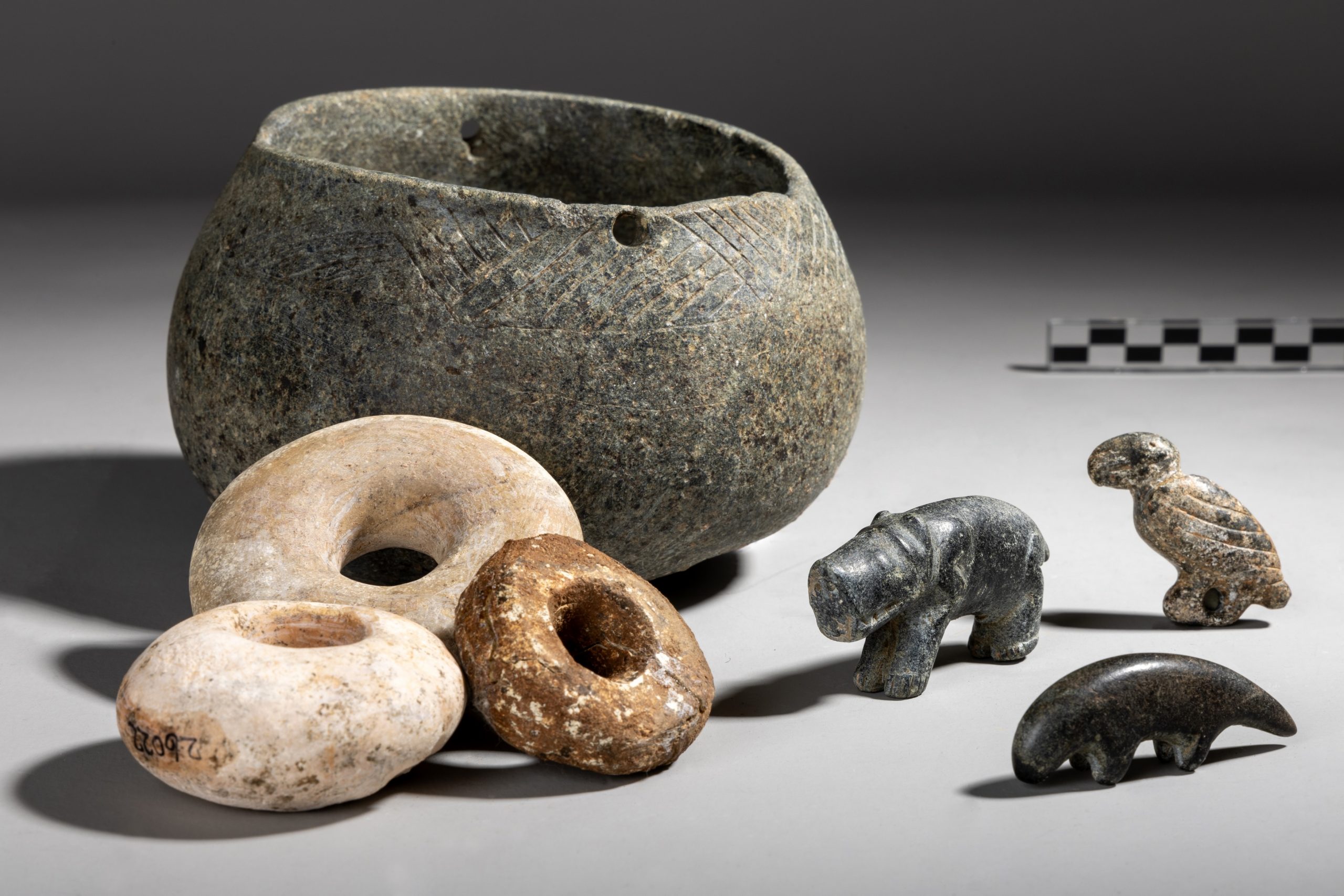
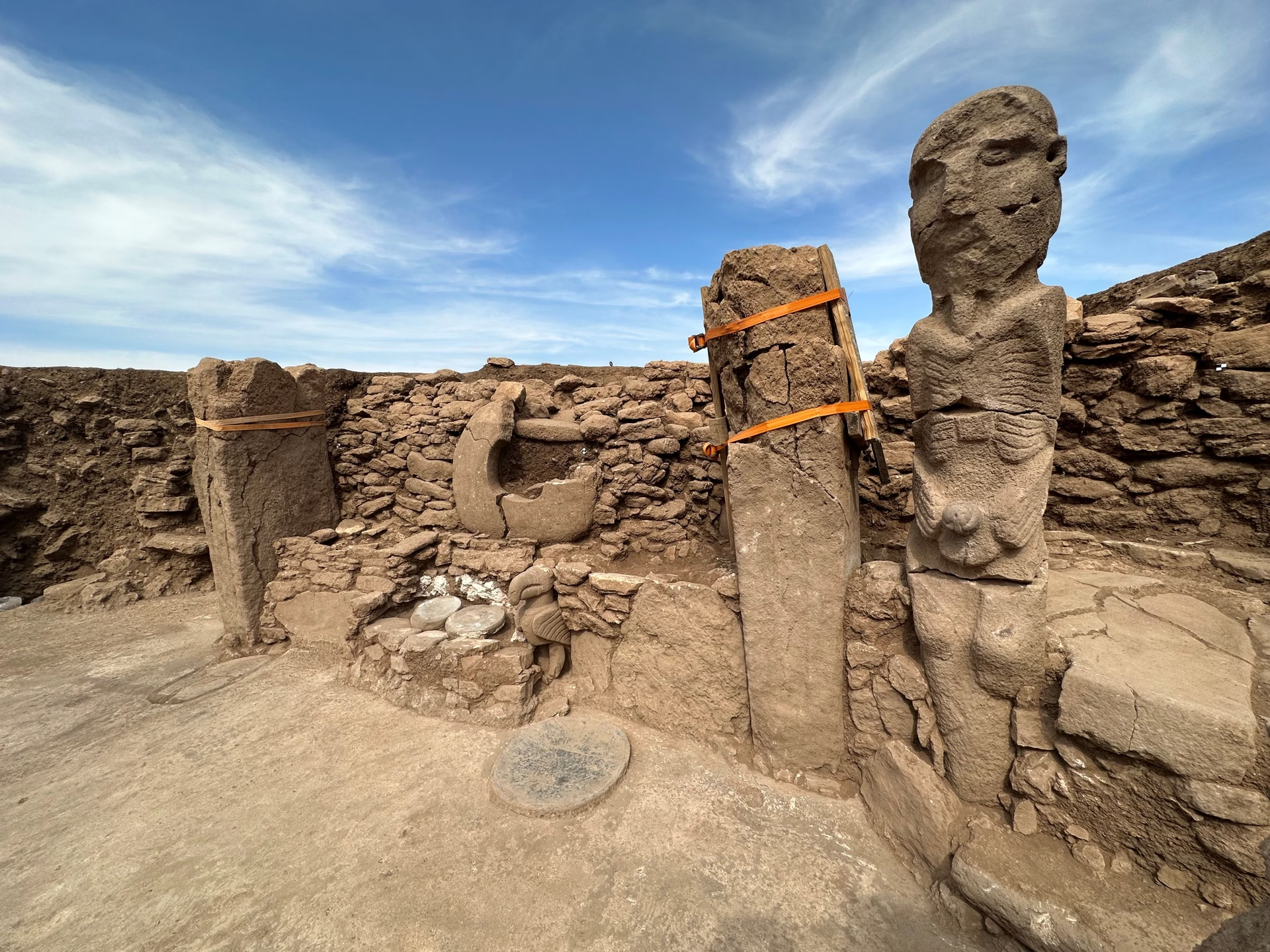
Excavations at Karahan Tepe have revealed a collection of three-dimensional sculptures and statues, primarily carved from local limestone, that provide insight into the artistic capabilities of Pre-Pottery Neolithic communities. These figures, dating to approximately 11,000 years ago, include anthropomorphic representations and animal forms, often integrated into the site’s architectural features. One of the most significant discoveries is a 2.3-meter-tall anthropomorphic statue unearthed in 2023, depicting a naked male figure seated on a stone bench and holding his phallus with both hands. The sculpture features a pronounced V-shaped collar, incised lines representing fingers, and detailed ribs along the torso, showcasing a level of realism rare for the period. This statue bears stylistic similarities to the Urfa Man, another early Neolithic anthropomorphic figure from the region, though it is taller and includes unique phallic emphasis. Phallic totems, consisting of freestanding stone phalluses, have also been found at the site, notably in a dedicated cult room containing at least 11 such elements carved directly from the bedrock. Smaller humanoid figures, including carved human heads and partial torsos, complement these larger works, often emphasizing anatomical details that suggest themes of fertility or ancestry. Animal statues form another key category, a detailed vulture sculpture discovered within one of the enclosures, featuring a sharply carved beak, prominent eyes, and outstretched wings that highlight the sculptors’ attention to naturalistic forms. In August 2025, excavations uncovered three small stone figurines depicting a fox, a vulture, and a wild boar, each approximately 11,500 years old, arranged in a way that suggests a three-dimensional narrative possibly related to prehistoric myth-making or storytelling. These three-dimensional works relate to the site’s broader iconography, where human and animal motifs appear together in ritual contexts. Many of these sculptures were placed in niches within enclosures or as freestanding elements inside structures, integrating them into the ceremonial spaces of Karahan Tepe. For instance, the 2.3-meter statue was positioned on a bench inside a building, while the vulture was found in association with architectural features suggesting ritual use.
Reliefs and Carvings
The reliefs and carvings at Karahan Tepe consist primarily of incised and bas-relief imagery executed on limestone surfaces, featuring a repertoire of motifs that emphasize animal forms and anthropomorphic elements. These two-dimensional engravings adorn the site’s characteristic T-shaped pillars and associated stelae, reflecting skilled stoneworking by Pre-Pottery Neolithic communities around 9500–9000 BCE. Common motifs include abstract geometric patterns such as zigzag lines and deep incised representations of body parts, notably human arms and legs that appear to extend from pillar surfaces, suggesting an anthropomorphic integration with the architecture. Totemic symbols are evident in superimposed animal figures on pillar fragments, evoking stacked or composite forms that may represent layered identities or hierarchies. These elements are often rendered with varying line depths to create emphasis, using techniques like pecking and incision with stone tools to achieve both low-relief outlines and higher bas-relief details. Animal depictions dominate the iconography, with snakes being the most recurrent motif—examples include a 70 cm long snake with a round head and wavy body carved in high relief on a T-shaped pillar, and another with a triangular head on a similar structure. Other animals feature prominently, such as a rabbit head with forelegs and a gazelle’s hind legs and tail incised on a smoothed limestone base (86 cm long), alongside unidentified quadruped legs on fluted pillars. Vultures, stylized as birds of prey, appear in bas-relief alongside other fauna like foxes and scorpions, often in dynamic poses that imply movement or interaction. Human figures are more abstracted, limited to body parts like embracing arms on three stele fragments, occasionally combined with phallic symbols in incised lines. In October 2025, a T-shaped stele was uncovered bearing a detailed human face with sharp contours, deep eye sockets, and a prominent nose, marking the first such full facial representation on a pillar at the site and reinforcing anthropomorphic interpretations. These motifs sometimes form suggestive narrative arrangements, as seen in sequential animal parts on bases that may depict processions or hunts. The carvings employ a range of techniques, including deep fluting on pillar sides for structural and visual accentuation, alongside shallow pecking for fine details and bolder chiseling for raised bas-reliefs up to several centimeters in depth. Stone tools, likely flint or obsidian implements, were used to incise lines varying from 1-5 cm wide, with surfaces often smoothed beforehand to facilitate precision. High-relief methods predominate for larger animals like snakes, allowing shadows to enhance form, while incised lines suit smaller, intricate elements like belts or extremities. Distribution of these reliefs is concentrated on the approximately 266 T-shaped pillars scattered across the site’s enclosures and open areas, with additional examples on freestanding stelae and occasional wall fragments within oval ceremonial structures. Snake and animal leg motifs cluster on pillar fronts and sides, while human arm engravings appear on pillar backs or edges, creating a 360-degree decorative scheme. Fewer instances occur on groundstone bases or vessels, such as a chlorite fragment with a zigzag snake, indicating portability in some symbolic expressions.
Significance and Interpretations
Karahan Tepe and Göbekli Tepe, both situated in southeastern Turkey’s Şanlıurfa Province, share fundamental architectural and cultural elements that point to a unified Pre-Pottery Neolithic tradition dating to approximately 11,000–9,000 BCE. Prominent among these are the T-shaped limestone pillars, which appear in large numbers at both sites—over 250 documented at Karahan Tepe alone—and often feature anthropomorphic details such as arms, belts, and relief carvings, suggesting they represented stylized human figures central to communal rituals. Enclosure designs also align closely, with circular or oval arrangements of these pillars enclosing open spaces, interpreted as monumental gathering areas for hunter-gatherer societies rather than domestic settlements. This shared iconography and construction style indicate a common cultural horizon across the region, where symbolic expressions of social organization and cosmology were expressed through monumental stonework. While the sites exhibit strong parallels, Karahan Tepe displays distinct emphases that differentiate it from Göbekli Tepe, potentially reflecting localized variations within the broader tradition. Radiocarbon dating and archaeological context place Karahan Tepe around 9500 BCE, contemporary with or slightly predating Göbekli Tepe’s earliest phases by a few centuries, though overlapping use periods confirm contemporaneity. Iconographically, Karahan Tepe prioritizes phallic and fertility motifs, evident in numerous upright stone pillars interpreted as totems and a “cult room” filled with phallus-shaped monoliths, contrasting with Göbekli Tepe’s predominant focus on animal reliefs such as foxes, snakes, and birds symbolizing totemic or emblematic themes. These differences highlight Karahan Tepe’s possible role in emphasizing human reproduction and vitality, while Göbekli Tepe’s fauna-centric carvings may underscore ecological or predatory narratives. As integral components of the Taş Tepeler (Stone Hills) complex, Karahan Tepe and Göbekli Tepe form part of a network of more than 20 Neolithic sites spread across approximately 200 kilometers in the Germuş Mountains, evidencing coordinated ritual and settlement practices among early sedentary communities. This regional clustering implies a shared social framework, with evidence of simultaneous construction of sacred and domestic spaces fostering the world’s earliest known examples of organized sedentism and communal faith systems. Ongoing excavations under the Taş Tepeler Project, initiated by Turkey’s Ministry of Culture and Tourism, link the sites through collaborative efforts, including joint surveys and artifact analysis that reveal interconnected material culture. Göbekli Tepe’s UNESCO World Heritage status since 2018 has extended to support broader complex nominations, promoting integrated research that underscores their mutual significance in rethinking Neolithic transitions.
Cultural Implications
The discovery of Karahan Tepe provides compelling evidence for complex social organization among pre-agricultural Neolithic communities in Upper Mesopotamia, as the site’s monumental constructions—including over 250 T-shaped pillars and large enclosures—required coordinated labor from groups potentially numbering in the hundreds, without reliance on farming or domestication. This challenges traditional models portraying hunter-gatherers as simple and egalitarian, revealing instead a capacity for large-scale cooperation driven by shared ideological or ritual motivations, as inferred from the site’s stratified architectural features and specialized craftsmanship. Ritual and symbolic elements at Karahan Tepe indicate its role as a ceremonial center, potentially dedicated to ancestor veneration and fertility rites, evidenced by phallic-shaped pillars, anthropomorphic carvings, and structures like the 23-meter-diameter elliptical enclosure filled with symbolic motifs such as serpentine channels and human-animal hybrids. These features, including a room with 10 phallus-like pillars and reliefs depicting aggressive masculine animals, point to rites of passage or initiation focused on manhood and fertility, integrating mythology into social cohesion without evidence of elite control. In October 2025, excavations uncovered a T-shaped stele bearing a detailed human face with sharp contours, deep eye sockets, and a prominent nose, further supporting views of pillars as anthropomorphic figures central to symbolic practices. As one of the earliest known villages dating to around 11,400 years ago, Karahan Tepe illuminates the transition to sedentism in Upper Mesopotamia, where abundant wild resources enabled year-round habitation in domestic dwellings and cisterns holding up to 100 tons of water, predating full agriculture by centuries. This shift from mobile foraging to settled communities, marked by domestic structures and early cereal processing, underscores how ritual centers like Karahan Tepe may have anchored social stability, encouraging population aggregation and resource management. The site’s contributions extend to broader Neolithic developments, influencing subsequent advancements in art, architecture, and social specialization across Southwest Asia, as seen in the spread of T-shaped pillar iconography and monumental building techniques to later settlements. By demonstrating pre-agricultural complexity, Karahan Tepe highlights how symbolic and ceremonial practices laid foundations for enduring cultural patterns, including narrative traditions and communal governance that shaped early civilizations.


